
Lost in Plastic: A Reflection on Anjan Das’s “Amra NoyChoy” Exhibition
Artist: Anjan Das
Exhibition: Amra NoyChoy
Venue: Fine Arts Academy
A Haunting Visual Journey into Environmental Anguish
The contemporary art scene often stirs emotions, but few exhibitions delve into environmental anguish as powerfully as Anjan Das’s Lost in Plastic, showcased at the Fine Arts Academy under the collective exhibition Amra NoyChoy. Das’s work speaks not in whispers but in raw, fragmented outcries — visualizing humanity’s entrapment in its own plastic-laden waste.
First Impressions: Discomfort and Distortion
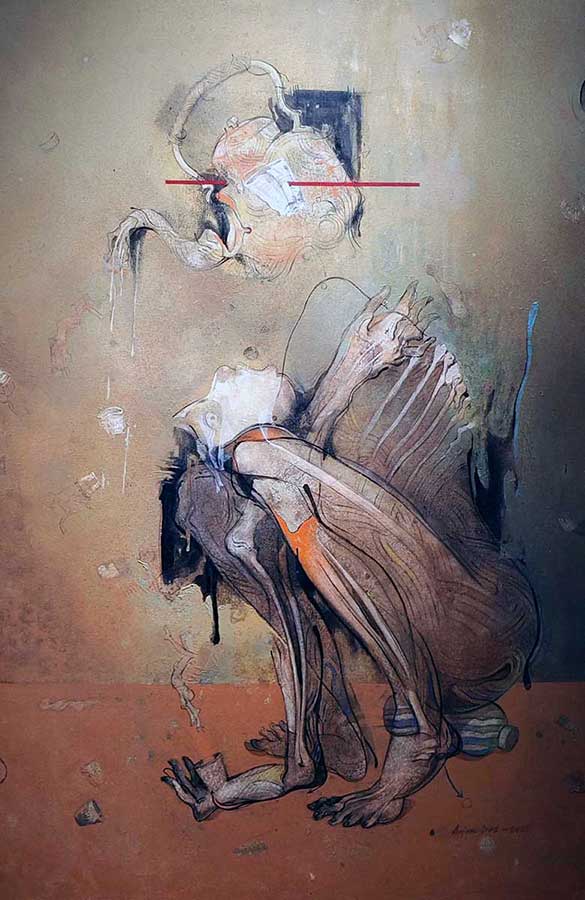
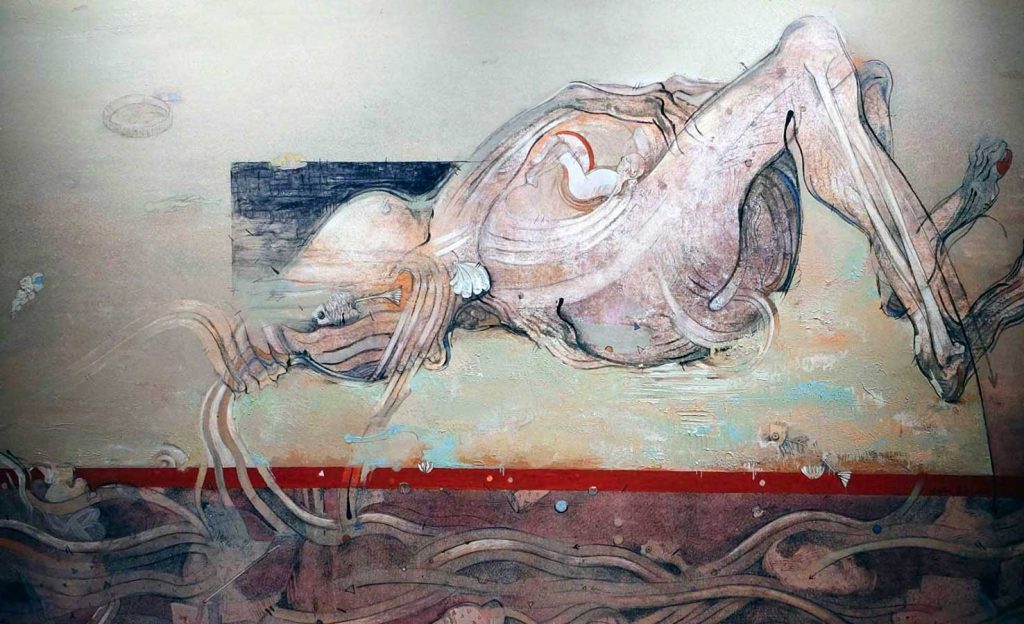
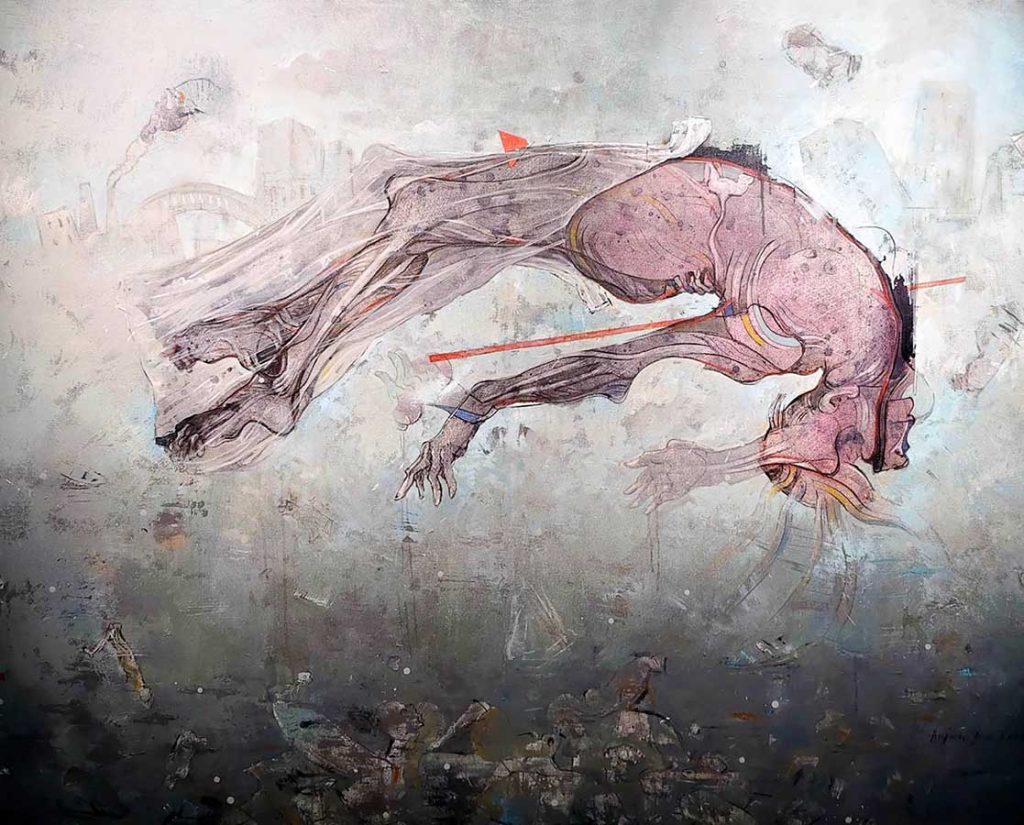
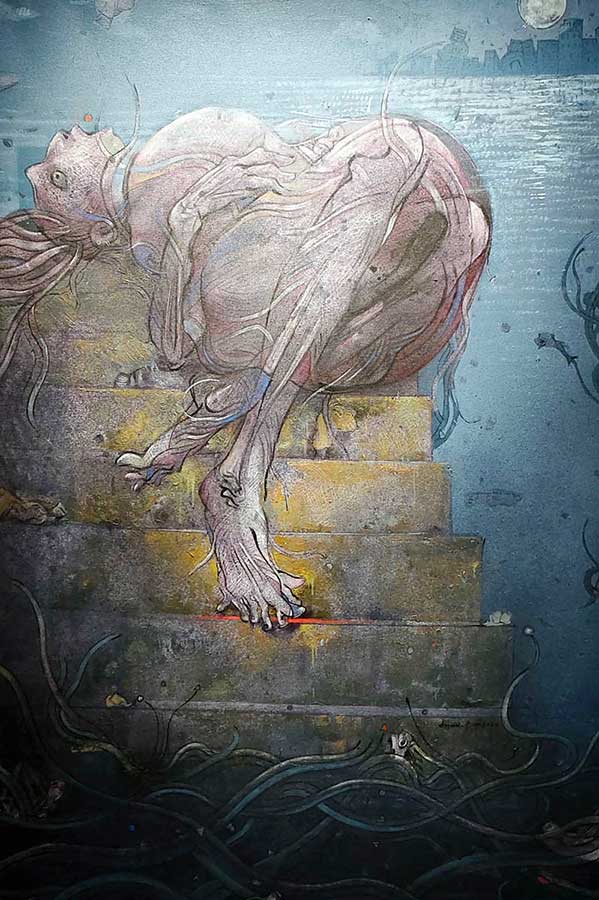
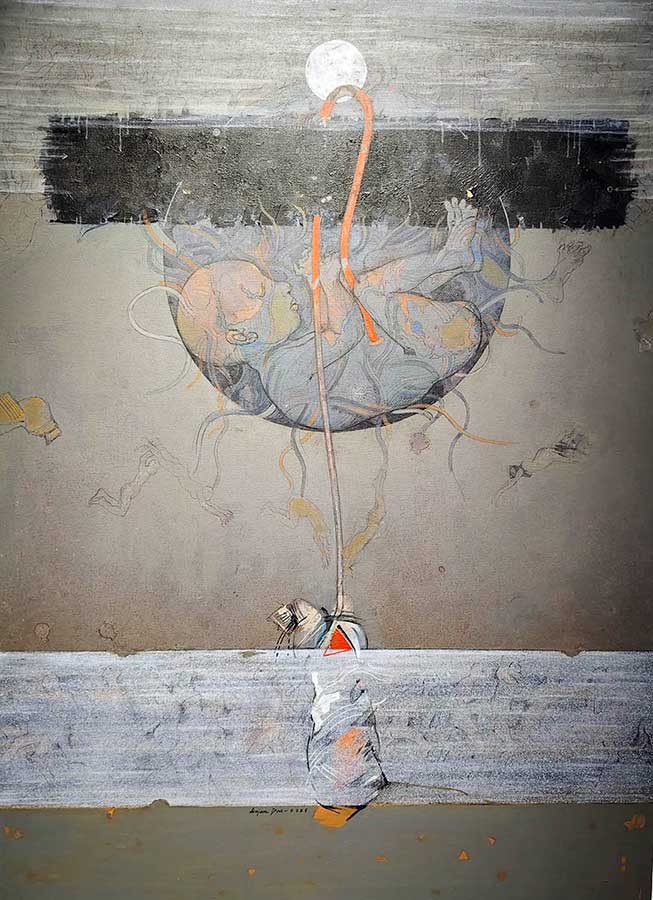
At first glance, his paintings evoke discomfort — skeletal, distorted human forms twisted and half-consumed by their surroundings. The muted, earthy tones blended with harsh lines and textures seem to strip life down to its bare essence. The figures, neither entirely human nor entirely decomposed, appear suspended in a state of decay, illustrating a haunting narrative of how plastic pollution suffocates not only nature but human existence itself.
The Red Line: A Lifeline or a Scar?
One striking element across Das’s works is his recurring use of a thin, red line — a symbolic lifeline, perhaps, or a final tether to hope, stretched tautly across the canvas. In some frames, it slices through the head, in others, it cuts through the chest or neck, almost like a surgical incision, reminding viewers of both pain and precision. This red line, juxtaposed against the pale, desaturated backdrops, demands attention. It’s as though Das is prompting us to consider the cost of our convenience-driven lifestyles.
Texture and Anatomy: A Conflict of Fragility and Permanence
The textural depth of his paintings — rough, layered strokes merging with more delicate, anatomical detailing — mirrors the conflict between nature’s fragility and the harsh permanence of plastic. His figures, twisted and hollowed, seem less like victims and more like remnants, almost fossilized in the synthetic world they can no longer escape. The entanglement of tubes and wires with bones and flesh symbolizes our unconscious assimilation of plastic into our very being — a commentary on microplastics, perhaps, now found even within human bodies.
Introspection Through Suffering
Das’s work doesn’t merely depict suffering — it compels introspection. His portrayal of the human form as both decayed and surviving underlines an essential truth: we are not separate from this crisis. We are woven into it.
A Visual Manifesto, Not Just an Exhibition
Lost in Plastic stands as more than an artistic statement — it’s a visual manifesto, urging viewers to confront the grotesque reality of modern consumption. It reminds us that art’s role is not just to beautify but to provoke, unsettle, and inspire change.
Anjan Das has achieved this masterfully, ensuring his audience doesn’t leave the gallery unscathed. His art lingers — like plastic itself — persistent, unyielding, unforgettable.
LifePlus Magazine – Who We Are
We feature inspirational stories of artists, photographers, actors, and performers through interviews and event coverage. We also review films, short films, art exhibitions, and books, helping creative works reach a wider audience.
Our Services:
✅ Advertisements & Promotions
✅ Exclusive Interviews
✅ Promotional Reviews
✅ Ad Design & Photography
📩 For inquiries & promotions: 094777 64615
🌐 Website: www.lifeplusmag.com