
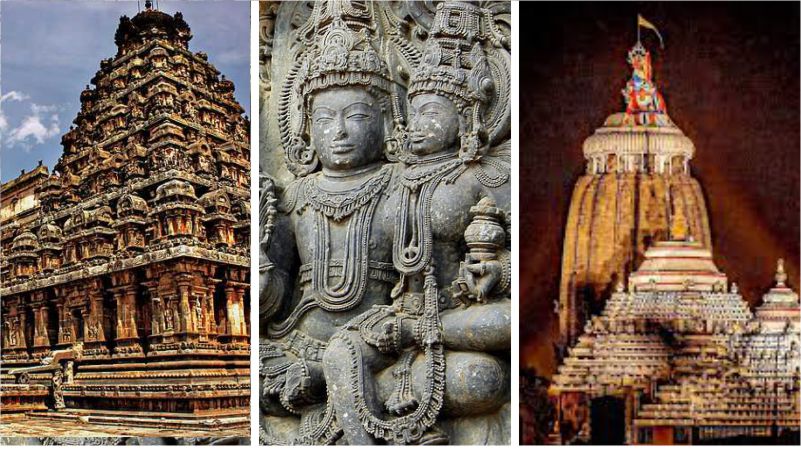
Art That Stands, and Fades, in Silence
Scattered across India are temples whose walls once throbbed with artistic life—every inch carved with dancers, musicians, warriors, mythical beasts, and celestial scenes. These sculptures, many of them centuries or even millennia old, are among the finest examples of ancient Indian craftsmanship.
Yet today, from Odisha to Tamil Nadu, from Karnataka to Maharashtra, these stone stories are falling silent—damaged by weather, polluted air, and most tragically, by institutional neglect.
When Guardians Fail: Real Cases of Damage
Konark Sun Temple (Odisha): Known for its massive chariot structure and ornate wheels, the temple’s carvings have been damaged by salty winds and careless repairs using cement mortar—causing long-term harm to the original sandstone.
Halebidu & Belur Temples (Karnataka): Famed Hoysala sculptures are discolored and degrading due to moss, biological growth, and pollution. Vandalism and poor crowd management only worsen the decay.
Kailasa Temple, Ellora (Maharashtra): Monolithic carvings at this cave temple are being worn down by water seepage, lack of drainage, and tourist foot traffic.
Airavatesvara Temple (Tamil Nadu): Despite being a UNESCO site, fragile sculptures have shown cracking and erosion from inadequate care and exposure.
Jagannath Temple (Puri, Odisha): Although active as a religious site, outer wall carvings—rich in artistic detail—suffer from corrosion and unsympathetic restoration.
Cultural Loss, Not Just Physical Decay
These are not mere architectural elements—they are records of ancient life: dress styles, music, rituals, community life, and artistic evolution. Their loss is a cultural tragedy.
But sadly, most restoration efforts in India are led by general contractors with little art conservation training. Agencies like the Archaeological Survey of India (ASI) have been repeatedly criticized for using incorrect materials, ignoring expert advice, and lacking a long-term vision for preserving our art heritage.
Reframing Conservation
Temples must be treated not only as places of devotion, but as open-air museums—homes to priceless works of art. This calls for:
Scientific Conservation: Guided by trained art historians and conservators.
Community Involvement: Local stakeholders can act as cultural guardians.
Digital Archiving: 3D scans and high-resolution records of sculptures must become standard practice.
Transparency: Restoration efforts and budgets must be made public for accountability.
Conclusion: Before the Last Detail Crumbles
Every fading sculpture is a warning. If we do not act now, these masterpieces may become unrecognizable—or vanish completely. What survives of our heritage should not depend on chance or charity, but on conscious care and commitment.
Let us not be the generation remembered for watching history crumble.
© Lifeplus Magazine | May 2025 Edition
This article is an original feature created exclusively for Lifeplus Magazine. All rights reserved. Reproduction or republication without permission is prohibited.