

Satyajit Ray: The Timeless Lens That Still Directs Our Conscience
On this day, the world once again circles around the sun to find itself face to face with a giant shadow that never left us—Satyajit Ray. Not just a filmmaker. Not merely a writer. Ray was an ecosystem. A self-contained universe of thought, observation, art, and courage. Today, we don’t just celebrate his birth—we decode his afterlife in our culture, creativity, and conscience.
What if Ray Was Born in the Digital Age?
Imagine Satyajit Ray in 2025. He’d probably reject Instagram filters but invent one that brings Pather Panchali’s aesthetic to reels. His Feluda series would be a brilliant noir web show on OTT platforms—binge-worthy, but never shallow. His screenwriting app would go viral—not because it makes writing easier, but because it would force people to think deeper.Ray wouldn’t chase trends. He’d pause them.
The Man Who Understood Silence Better Than Most Understand Sound
While Bollywood exploded in orchestras, Ray gave us silence—a powerful, almost meditative force in his films. In Charulata, the slow swing of a lonely woman tells more than any dialogue. In Aparajito, the grief of a mother isn’t shouted—it’s etched quietly in her retreating posture.Today, in a world of content overload, Ray’s pacing feels like a rebellion. His stillness has more meaning than a thousand edits per minute.
He Didn’t Just Make Films—He Dissected India’s Soul
Ray was not a nationalist in the flag-waving sense. He was more dangerous. He was a mirror-holder. He showed us rural poverty in Pather Panchali with such honesty, it burned. He peeled off upper-class hypocrisy in Jana Aranya, where morality gets auctioned at every turn.What he left behind is not just cinema. It’s a toolkit for cultural surgery.
Feluda, Professor Shonku, and the Birth of Bengali Cool
Ray wasn’t just an auteur—he was a genre-maker. He made Bengali intelligence sexy. Through Feluda, he gave us a detective who didn’t chase car chases but solved puzzles of the human mind. And through Professor Shonku, he gave young Bengali readers a passport to the stars before Elon Musk started dreaming of Mars.In every line Ray wrote, there was a call—to observe, to imagine, to think.
Design, Music, Typography—The Forgotten Satyajit
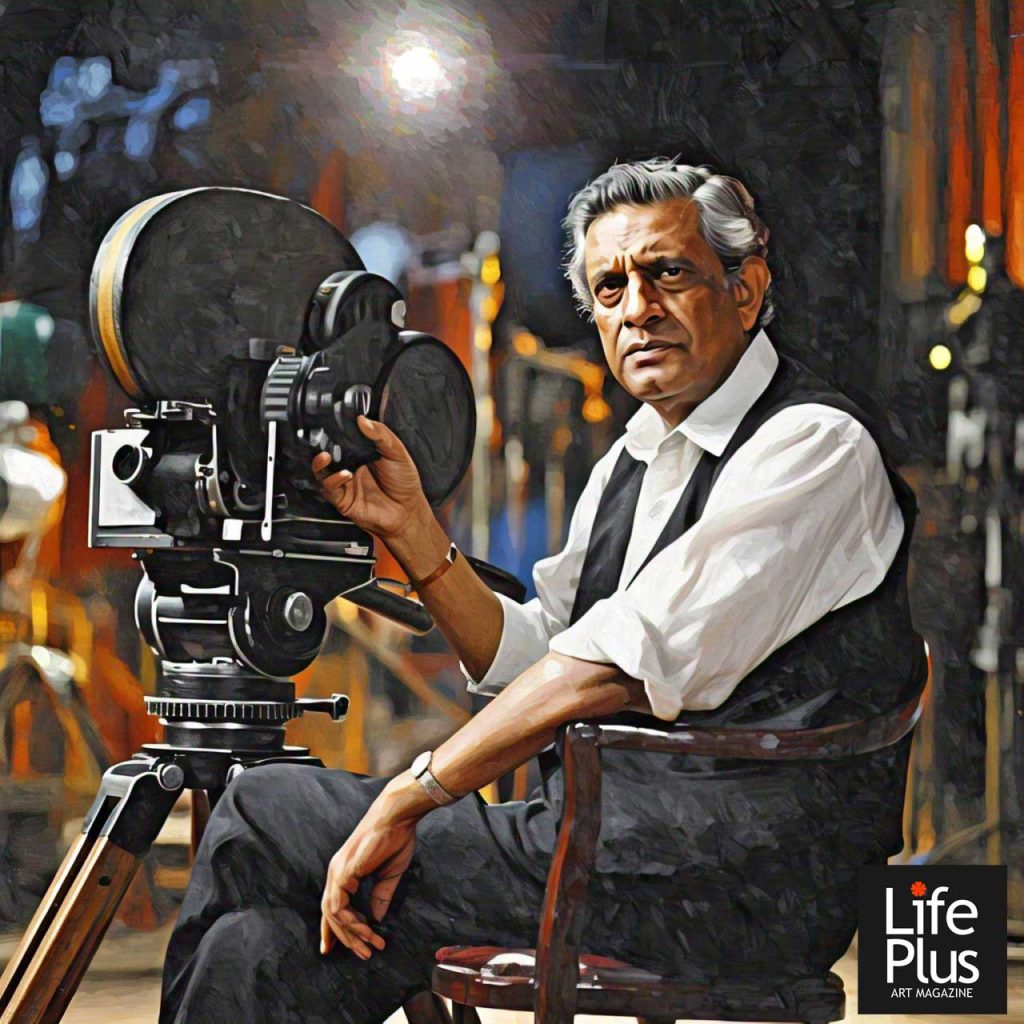
Many forget that Ray was also a trained graphic designer. He designed book covers, film posters, and even created his own fonts. He composed background scores, edited frames by hand, and wrote his own subtitles.Today’s creators should take note: Ray wasn’t a specialist. He was a universe in motion. He built stories pixel by pixel, not because he had to—but because he wanted to own the soul of the story.
Why Ray Still Matters
Because in a world of shallow narratives, he searched for truth. Because in an age of instant gratification, he dared to tell slow-burning stories. Because when others filmed the obvious, he filmed the invisible.
The Ray We Need Now
We need Ray when AI writes stories but lacks soul. We need Ray when digital cinema forgets its roots. We need Ray when creators forget the responsibility that comes with voice.
So today, on his birthday, Lifeplus Magazine salutes not just the man, but the movement called Satyajit Ray.He isn’t just part of our past.He is our moral future—waiting patiently in black and white.