

Monsoon Notes from Kumaon
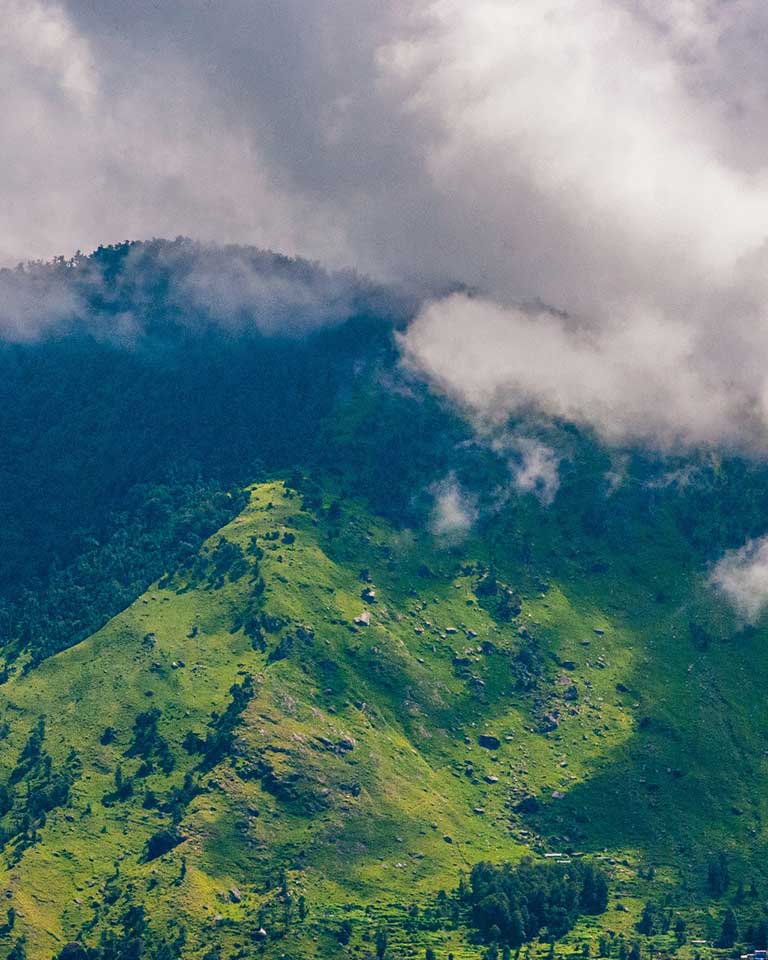
July’s monsoon paints the Kumaon hills in fresh green. Clouds wrap around pine forests and quiet villages like soft blankets. This season, the hills breathe calmly—no rush of tourists. Our journey began with a stop at Ranikhet.
Ranikhet wasn’t part of the plan. Devan Singh, our driver, took us down a road that smelled of wet pine. The golf course was our first stop—a peaceful, green stretch looked after by the army. No golfers were around, but the place held its charm. Old colonial bungalows stood like forgotten stage sets. We left with muddy shoes and pockets full of pears.
Kaushani welcomed us with low-hanging clouds. We stayed two nights in this quiet village. The gardens here are neat and patterned, with bushes lining the slopes. Small trails lead to viewpoints, and on clear mornings, you can see the Himalayan peaks—though they stayed hidden from us. Below the tea gardens are orchards. Farmers work between rain spells, and village shops sell fruit wrapped in paper, waiting to be turned into jams and syrups. Locals still make small batches of pear jam and sun-dried fruits.
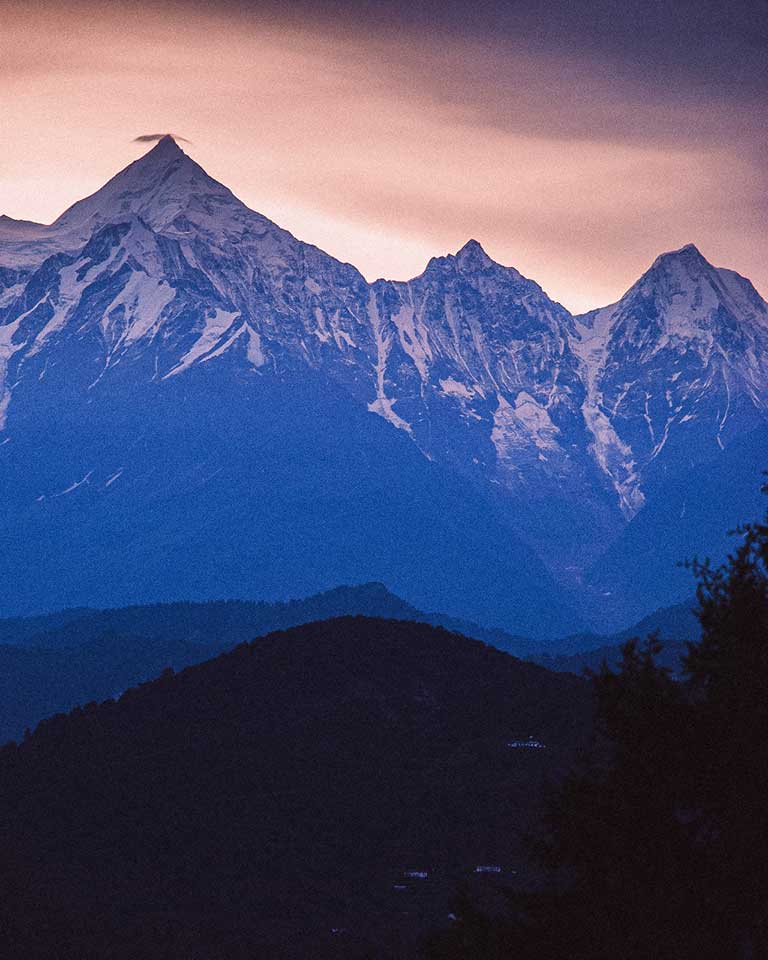
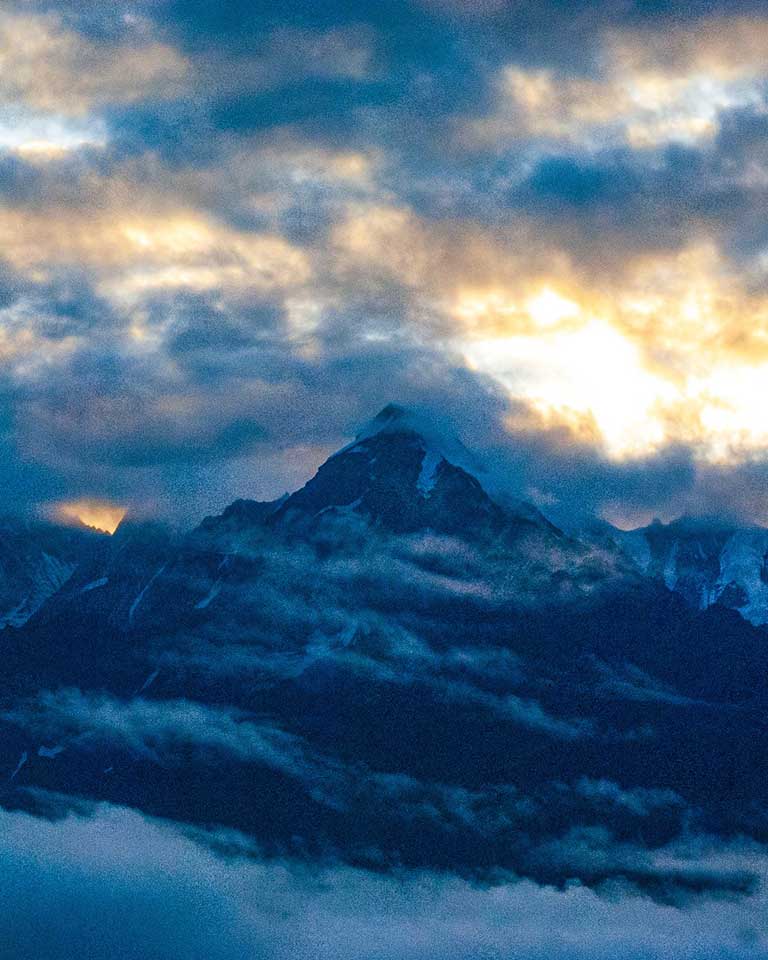
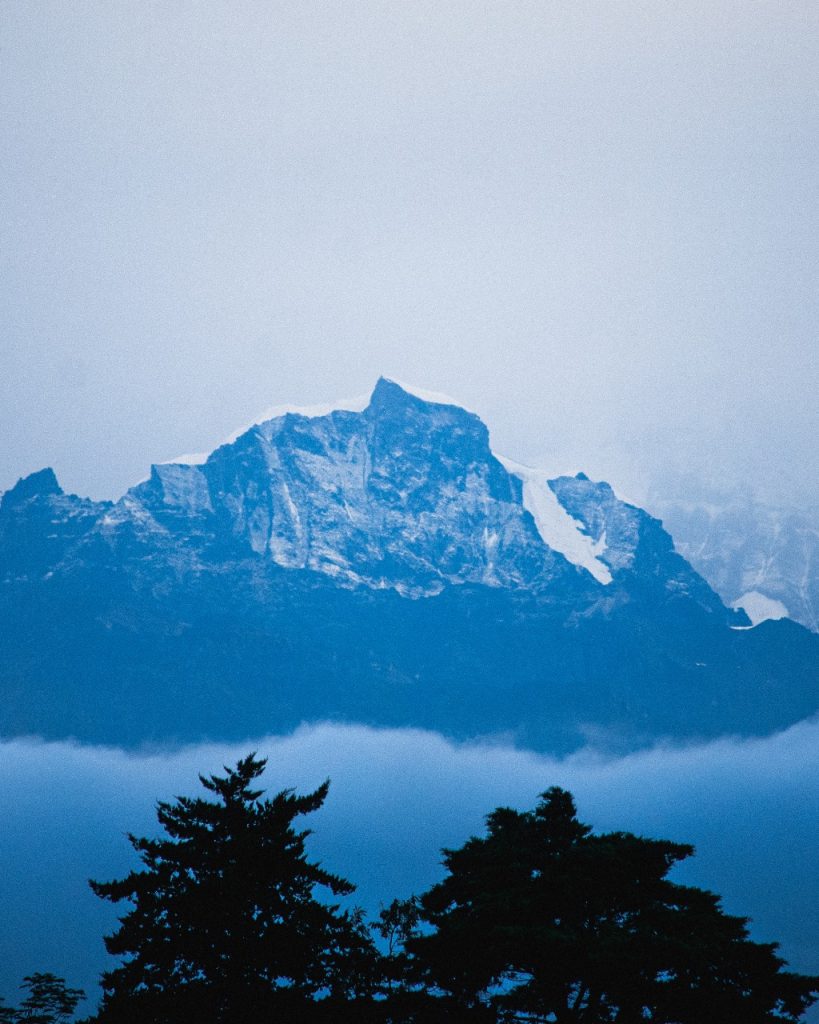
Devan Singh drove us through winding roads and waterfalls to Munsyari, near the edge of the world. Here, the five peaks of Panchachuli—meaning “five hearths”—stood tall. Legends say the Pandavas cooked their last meal here before heading to heaven. These peaks, ranging from 6,334 to 6,904 meters, are both sacred and challenging for climbers. We reached Munsyari around 7 p.m. That night, as the clouds cleared, the Panchachuli peaks appeared—soft and glowing, like five silver lamps against the dark sky.
We left Munsyari early, before the day settled. The road to Chakori felt like a moving painting. Green cliffs, waterfalls around sharp turns, and misty valleys. Chakori is smaller than Munsyari, with fewer homestays and a small market. We arrived in the rain. The next morning, the sky lit up like an old photo coming to life. The Panchachuli peaks didn’t just appear—they glowed in golden, orange, and yellow light. The snow looked like it was shining from inside. We watched quietly as the town woke up. Chakori stays peaceful, even in good weather.
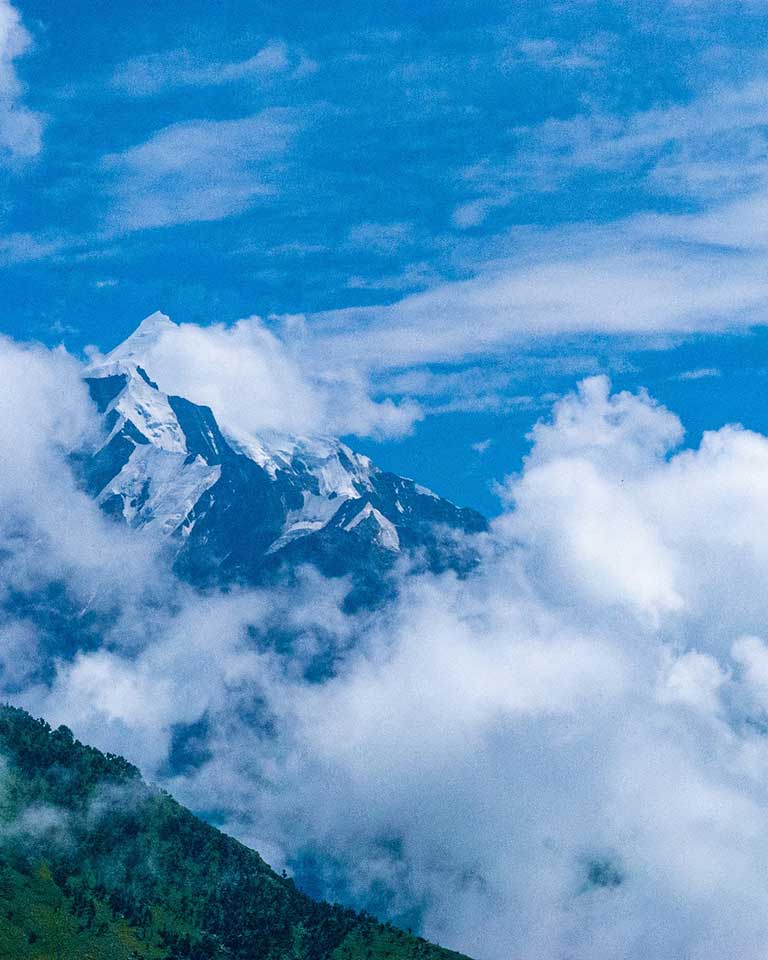
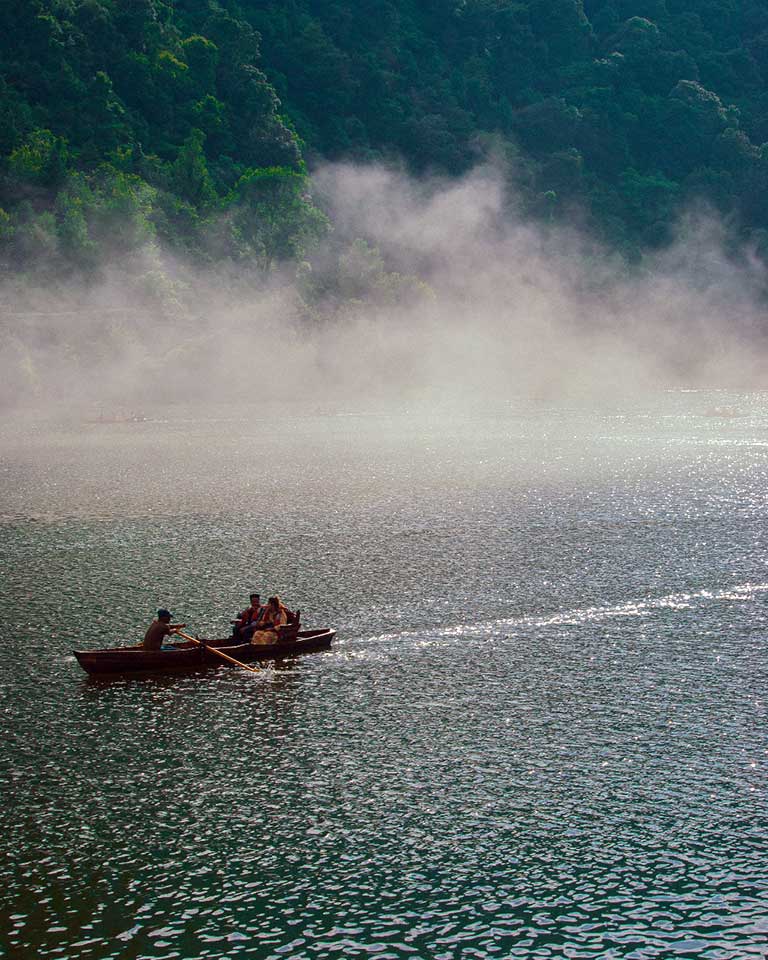
We didn’t rush to Nainital. Instead, we stopped at Binsar, letting the hills guide us. Eco Binsar is a green forest patch spread over 45 square kilometers. The Chand kings and later the British used it as a summer retreat. Some old buildings still stand among the trees. Binsar shows a different side of the Himalayas. The food was simple and warm—rice, dal, rotis, and vegetable stews. We walked under mossy trees and listened to birds—tits, magpies, laughing thrushes, and maybe a pheasant. The sanctuary has over 200 bird species. Zero Point offers wide views on clear days. After a night of bird songs and forest air, we packed again for the lake town.
Nainital greeted us after Binsar’s quiet. The Mall Road is the town’s main street. Naini Lake is the heart of the town—its rhythm shapes everything. The lake is calmest at dawn, and boats run till around 6 p.m., so plan your rides accordingly. For food, Sakley’s is famous for breakfast and pastries. Machan on the Mall serves good Chinese food and has windows overlooking the street. One morning, we visited the G. B. Pant High Altitude Zoo, known for Himalayan animals. We also explored the seven lakes—Sattal, the biggest, surrounded by oaks and pines; Naukuchiatal, with nine corners; Bhimtal, with its island; and smaller ones like Nal, Khurpatal, Pashupati, and Nand. From Nainital, you can visit Hanuman Garhi, Snowview Point, or the Naina Devi Temple at the lake’s northern tip.
On our last evening, rain tapped steadily on the lake. The taste of bal mithai lingered. We left Nainital when the lake shimmered gold. Back in Kolkata, I realized how each place in Kumaon added a unique note to a larger melody. Now, away from the journey, I can see the full picture—the hills, the villages, the living map of Kumaon. It still echoes in my mind.
✍️ by Srijit Das, Kolkata, Pursuing Masters in Economics, Jadavpur University