

My Name is Imran — A Humane Testimony
Can the full extent of an inner turmoil ever be grasped from the outside? A face, a few fragmented phrases, certain behavioral inconsistencies, unexplained bursts of excitement, sudden withdrawal—we observe these and rush to conclusions. We say, “Something is wrong with them.”
But this “not being alright” carries its own history—long, unspoken, and often profoundly solitary. “My Name is Imran” offers a restrained and deeply humane rendering of that history. It is not merely a documentary; rather, it is an attempt to make visible the invisible labor of sustaining the human mind—its fragile balances, its oscillations, its quiet endurance.
Here, Imran is both an individual and a metaphor—a reflection of those countless lives around us whose suffering we misread as “temperament,” “problem,” “madness,” or “exaggeration.” In Abhishek Ganguly’s work, bipolar disorder is not treated as a subject—it is presented as an intrinsic condition of lived experience.
The documentary portrays Imran’s fluctuations—his ruptured rhythms, restlessness, and sensitivity—in a way that allows the viewer to encounter a complete human being, one whom society repeatedly attempts to fragment and misinterpret.
The language of the film remains restrained, devoid of excess, and consciously avoids emotional manipulation. The director seems intent not on showing, but on listening.
This ethics of listening is crucial. Much work on mental health tends to render the afflicted individual into spectacle—reducing their pain into consumable “content.” Here, however, Imran is never exposed. A respectful distance is maintained around his existence. Through silences, pauses, incomplete sentences, and fleeting images, the film constructs a kind of psychological geography—where events are sparse, but experience is profound.
One of the most resonant presences in the documentary emerges elsewhere: Imran’s mother, Mrs. Ratna Chowdhury. In our society, the language of care is limited—especially in the context of mental illness, where sustaining someone requires not only treatment but immense patience, companionship, and emotional resilience.
She is not portrayed as a dramatic figure, but as a deeply lived reality. In her, one witnesses both tenderness and an extraordinary capacity to endure. It becomes evident that bipolar disorder is not confined to an individual—it enters a family like a prolonged climate, altering rhythms of time, the nature of relationships, even the very meaning of love. Ganguly brings this unarticulated history into visibility—where fatigue, helplessness, and relentless effort coexist within those who remain beside.
The documentary also beautifully explores the relationship between Imran’s lived experience and his expression through shayari. He is, by instinct, a poet—someone who finds words even within the labyrinth of his condition. Here, language is not merely narrative; it becomes a mode of survival.
Mental suffering often renders individuals speechless. And what cannot be articulated becomes heavier to carry. When silence finds form in language, creation may not heal—but it becomes a companion to existence. Imran’s poetry forms that bridge—an internal inscription of returning from darkness.
The recorded form of these shayaris owes much to the creative empathy and encouragement of Rumela Mukherjee—dancer and social worker. She is not merely an organizer of the documentary; her role in nurturing Imran’s creative expression is deeply significant. Many of the film’s most evocative moments bear the imprint of her presence.
In discussions around this documentary, one thing becomes clear—it is not simply a “good film,” but a necessary one. This work aligns with Abhishek Ganguly’s consistent engagement with what he calls the “least visited turfs”—those complex, uncomfortable, and socially neglected spaces that cinema often avoids.
When such work reaches audiences through platforms like YouTube, responses often transcend conventional “reviews” and become personal confessions. In this way, a documentary moves beyond art—it becomes a site of social dialogue.
We inhabit a time when the phrase mental health is widely circulated—yet often remains superficial in its understanding. This film reminds us that mental health is not a slogan. It is a lived reality shaped by personal histories, relationships, societal perception, and prolonged silences.
Ultimately, while “My Name is Imran” tells the story of an individual, it reflects the structure of our society. It compels us to ask:
Whom do we call “normal”?
Whom do we label as “problematic”?
And perhaps that is why this documentary is not merely a film—it is an exercise in learning to see human beings anew.
-A Review by Sudeshna Sanyal
Directed by Abhishek Ganguly
(Cinema for a Cause)
Special Acknowledgements:
Ratna Chowdhury
Rumela Mukherji
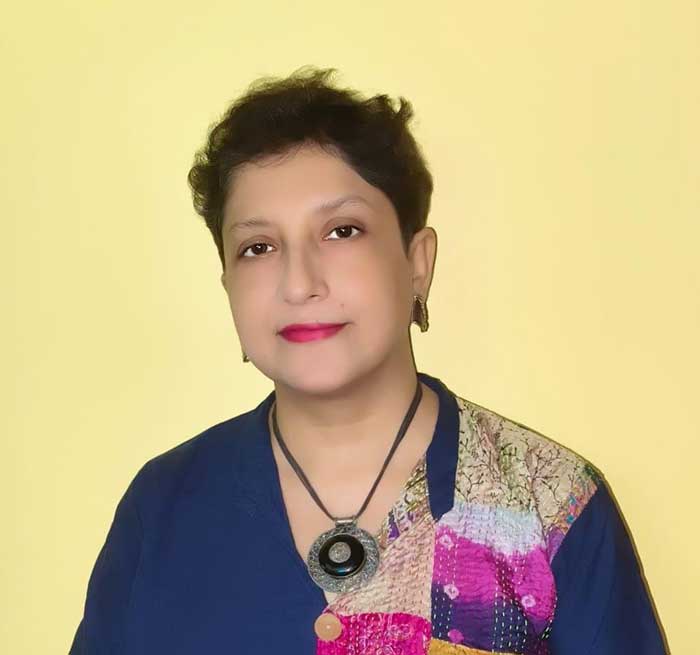
Sudeshna Sanyal considers writing to be the language of her thoughts. While her profession lies in teaching at primary schools, her deeper passion is education—an area she constantly explores and reflects upon. The many dimensions of learning, both inside and outside the classroom, the imaginative world of children’s minds, and the overlooked stories of society inspire her to think critically and express herself through words.
She enjoys writing on diverse subjects, often positioning herself between what is considered relevant and irrelevant. Reading is her daily companion, and alongside writing poetry, she also draws—gradually shaping her identity through dialogue with art. For Sudeshna, embracing an artistic sense of life is a way to survive and thrive, and she seeks to share that life with readers through her words.