
Landscape in the Mist: Notes from Tumling
Written and Photographed by Srijit Das
A long, unbroken ribbon unfurling itself into the mountains. It stretches forward simply continuing. There is something almost hypnotic in the way it runs. Accumulation of distance. Then the fog arrives. It seeps in from the edges. Dissolves a lot of certainty. On one side, the mountains rise, but not fully. They reveal themselves in fragments. A dark slope appears, then disappears again, swallowed by the fog. The other side falls away into an unseen depth. You know there is a valley there, going downward into distances you cannot measure, but the fog holds it back, concealing its extent.
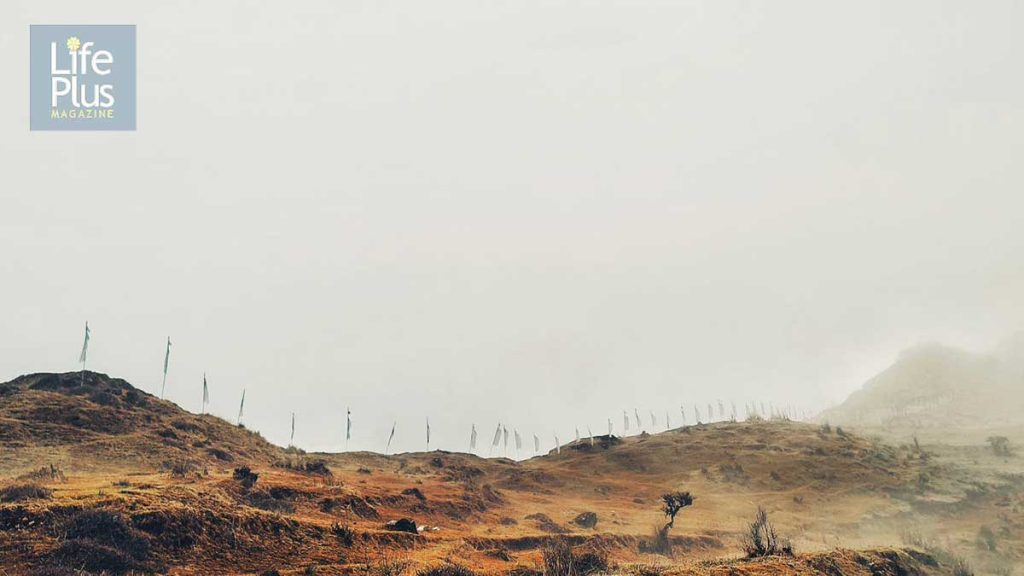
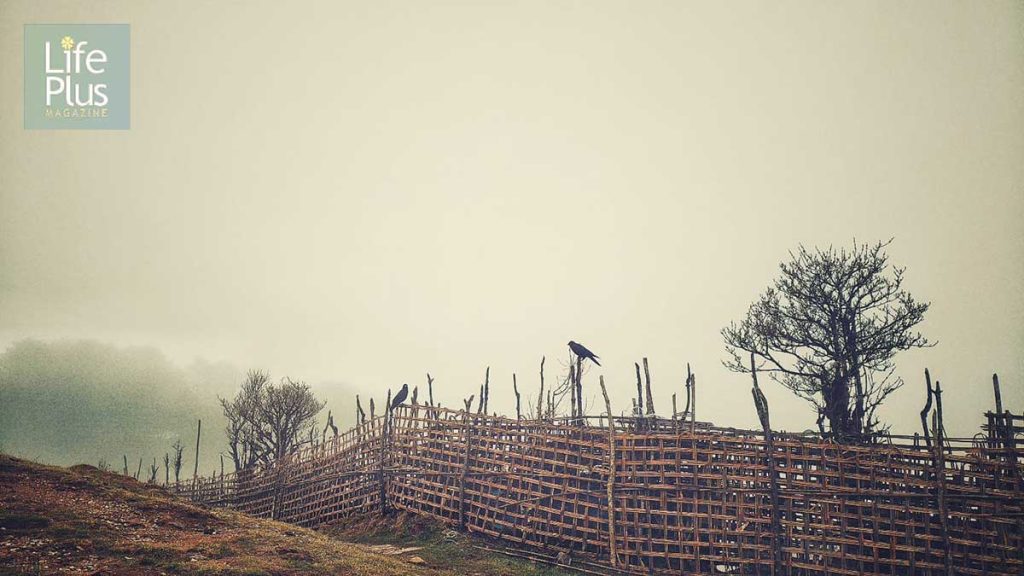
The road curves, gently, endlessly. Each bend leads to more road, more fog. Occasionally, shapes emerge at the periphery, trees, their forms elongated and somewhat ghostlike. Sometimes a faint structure appears, like a fence. A suggestion of habitation. Tumling has to be approached like this. You immerse yourself in the fog.
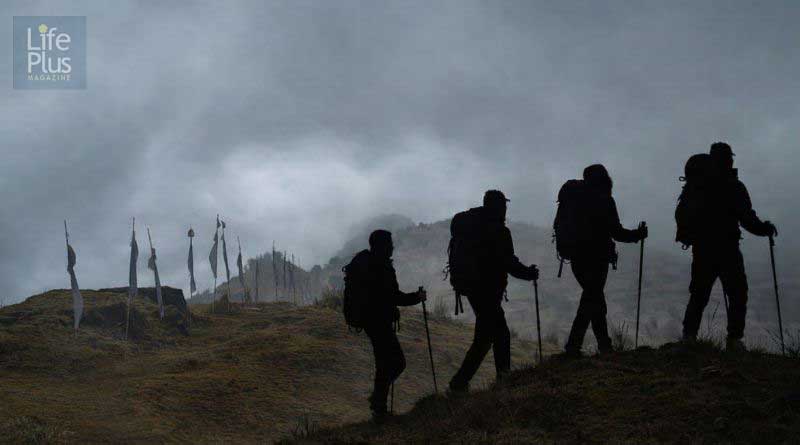
You leave Tonglu behind and begin to descend. The walk is short in distance, about 2 km, but it does not feel short in the body; it takes time, and the time is filled with fog and stones. Tumling itself sits at roughly 9,600 feet on the Sandakphu route, on that borderland where India and Nepal seem less like separate countries. A few houses, a few lodges, a few lives keeping warm against the cold. The settlement is small. Different guides describe only a handful of local families here, as well as lodges such as Shikhar Lodge, Satkar Lodge, and Mountain View Lodge. One of the best-known stays, Shikhar Lodge, began as a Gurung family house before becoming what trekkers know now: a room, a meal, a window, a view. That is what I loved about Tumling. Even the larger trekkers’ hut at Tonglu belongs to this same world of practicality with dormitory rooms, individual beds, a restaurant attached, a place for tired bodies to be held for one night before the road asks for them again.
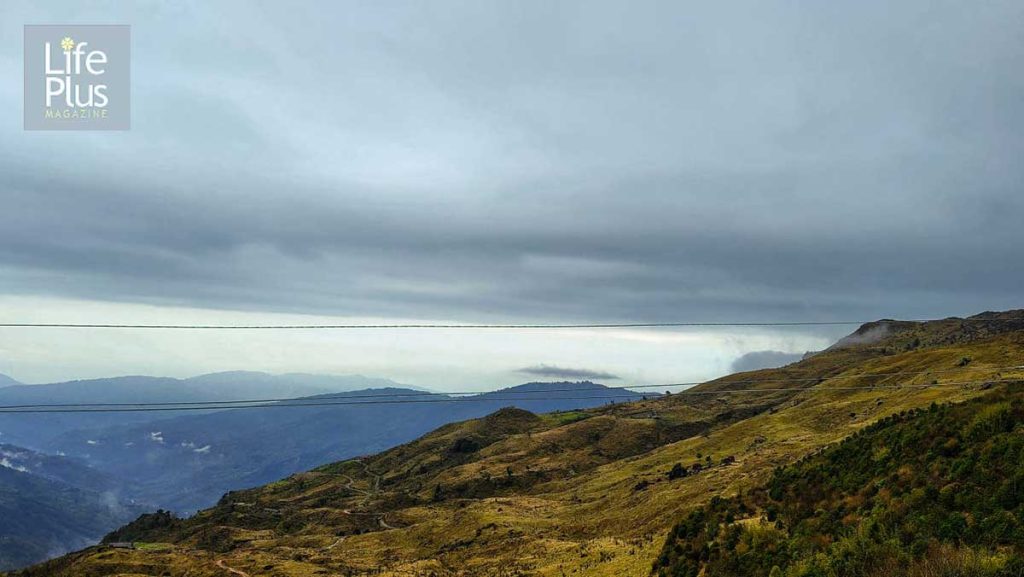
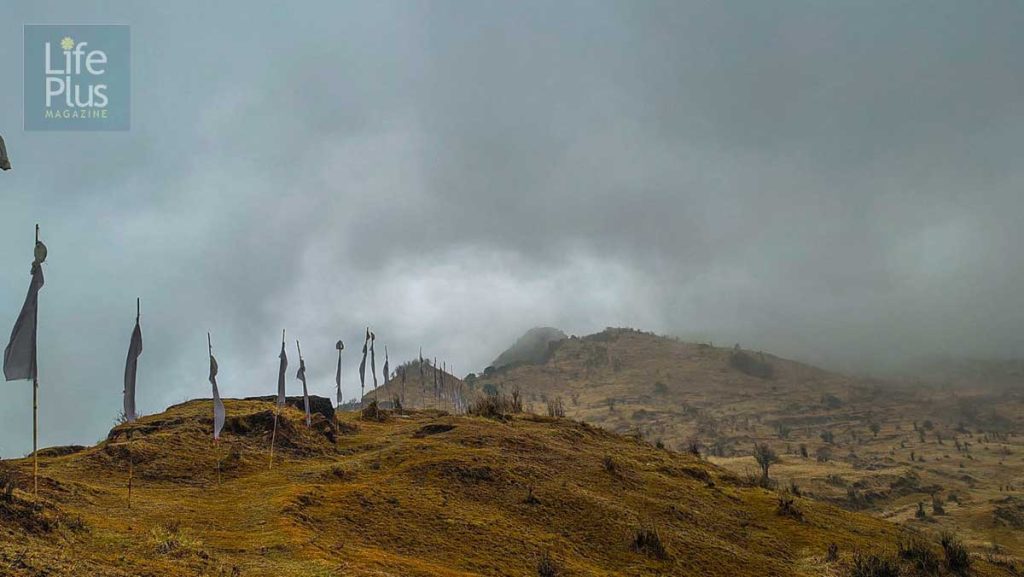
From Tumling, the next day’s march moves toward Gairibas and then Kalipokhri, the “black pond” whose dark water gives the place its name. The government trek notes describe Kalipokhri as a small pond whose water is black and muddy and never freezes. That is the thing about these Himalayan stops. Some of them are absurd. The village or hamlet of Tumling is humble. It is the atmosphere which is immense. A lot of people might ask you, “Did you see the Kanchenjunga?” And of course, the question is never only about the mountain. But really, the questions are whether the fog chose to part, whether the light chose to linger, whether the ridge stood still long enough for the eye to believe what it was seeing. From Tumling, on a clear day, the wider panorama opens out toward the Kanchenjunga range and the Everest group, with the Nepalese valleys and the plains of North Bengal. However, you do not stand in Tumling merely to tick off a sight. You stand there and let the landscape happen to you, quite naturally. Even when the great snow peaks are not visible, the place does not feel diminished. The absence becomes part of the view, and the waiting becomes part of the beauty. A part of the overall experience. The fog, the rain, the ochre slopes, the wet bamboo, the black pond, the small lodges and the moving trekkers all came together into something that could not be summarized as a sight. It is more than that.
I stayed at the Shikhar Lodge. The lodge was large. It was made of wooden houses, built for the weather, for fog and the long periods of cold. The common area, especially, stayed with me. There was a fire there, fed by coal, and it gave the room a steady heart. You sit near it and slowly feel your fingers return to you. The lodge itself was very wooden, and that wood gave everything a certain aesthetic. It was also surprisingly well decorated. The space felt arranged by people who understood that trekkers arrive tired, cold, a bit undone by the road.
And the food was one of the best parts of it. Breakfast had that generous simplicity that somehow tastes better in the mountains than anywhere else. Eggs, poha, pawrota with chana. And then there was the Tibetan bread, with honey, which was the real highlight, the thing that seemed to alter the morning. It was extraordinary. I even went to the kitchen, saw everything was being done on woodfire, by hand, in a space run by a family. While eating, you could always see the kitchen. The smoke and the labour. That family-run hospitality mattered immensely. It is one thing to be served well. One morning, there was a lot of rain. The rain made the day feel smaller or more enclosed. I spent some time talking to the people in the kitchen then. They were easy to talk to and they had that unobtrusive kindness. At times, they came and gave me some coal, and I lit a little fire to keep my hands warm. It was such a simple act, and yet it stayed with me. That, perhaps, is the essence of mountain hospitality. It is a common theme everywhere.
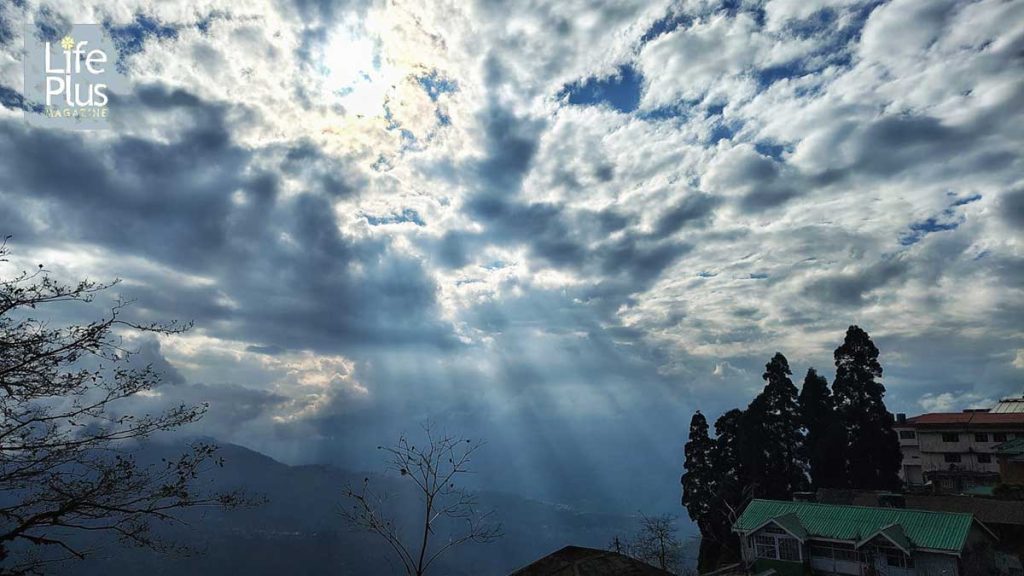
The weather itself was uncompromising. At night, the temperature dropped to zero at times, and even during the day it hovered around six or seven degrees. Water would freeze at night. You begin to understand your own fragility in an oddly grateful way. They make the warmth inside the lodge more meaningful, the food more satisfying. Even a cup of tea or a sip of rum feels like a rescue. That is what I remember most clearly. Not only the view outside, or the road leading there, but the interior. That night, the rain intensified. Then, gradually, the sound changes. There is a hardness to it now. A sharper, more insistent tapping. Hail. By morning, the rooftops are covered. There is a thin, luminous layer that catches the first light. The houses, the paths, they all seem to wear the snowfall lightly, as if it were an extension of the fog.
Nearby, there is a little shop, one with just four tables. There was tea, coffee and momos. Trekkers usually paused here with numb fingers and wet socks. But what caught my eye first was the red liquid standing in bottles, kept in plain sight. It was rhododendron wine and in these hills, March and April are the months when the flowers are at their fullest. The valley begins to blush with bloom and the roadsides feel lit. The Darjeeling-Sikkim Himalaya are especially rich in rhododendrons. I asked about the wine, and they let me taste it. The first sip was floral, yes, but it did not feel perfumed. It had an uncloying sweetness. I liked it immediately. It felt very handmade. I took a bottle back to Kolkata. In local practice, the wine is often made from fallen blossoms collected from the ground rather than plucked from the trees. It is part of ethics. The slopes around Tumling and along the Sandakphu ridge are part of a large ecological diversity. Rhododendrons, primulas, alpine flowers and magnolias.
After that, we took the car down toward Manebhanjang. Retracing the road in the opposite direction. Manebhanjang is the major hinge of the journey. The road changes and the steepness shifts as well. You need to change cars here and get a permit. The place is on the edge; beyond that, there is Nepal. From Manebhanjang, the descent towards Darjeeling is gentler. We decided to spend a day or two there before heading back to Kolkata. After the high wind and the fog and the cold and the long stretches of road, I believe Darjeeling is a good closing note. To go to many places like Tumling is to accept, willingly, that comfort will not be the whole story. There will be cold mornings, wet shoes, steep roads and of course uncertain weather. And in return, they give something really precious, which is a clearing of the mind and a memory. The climb always makes the view much better! One should go out more often, go farther than the familiar road and let the senses be startled again.
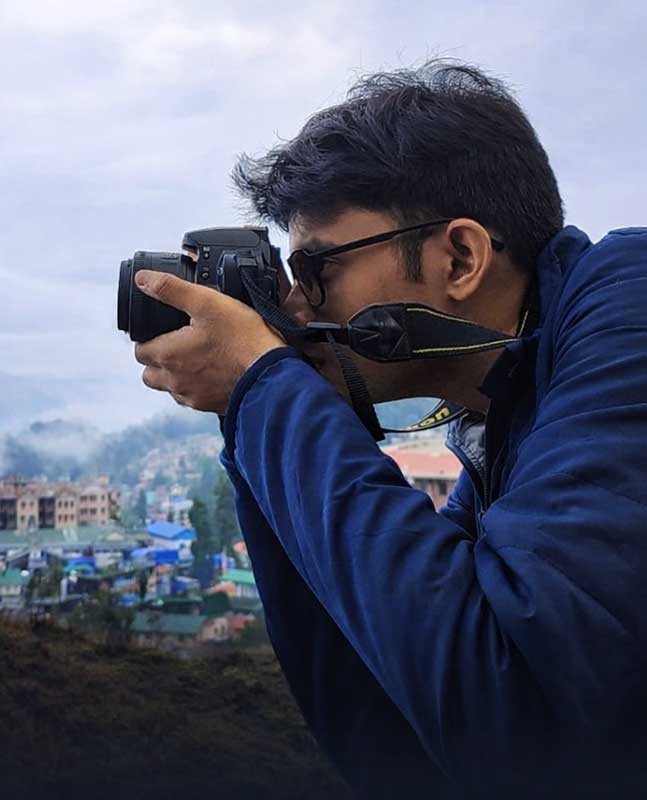
Author Introduction – Srijit Das
Srijit Das is a graduate in Economics from Jadavpur University and a storyteller at heart. Rooted in Kolkata’s layered histories, he channels his love for narratives through photography and visual storytelling. His work often blends the analytical clarity of his academic background with the emotional depth of lived experiences, creating stories that resonate across cultures and generations.
In his travel story “Landscape in the Mist: Notes from Tumling,” Srijit captures the haunting beauty of the Himalayan trails, where fog, silence, and human warmth intertwine. Through his lens and words, he invites readers to step into Tumling’s mist‑laden paths and discover how memory and landscape shape one another. His writing reflects not only a passion for exploration but also a deep commitment to preserving the subtle rhythms of everyday life in places often overlooked.