
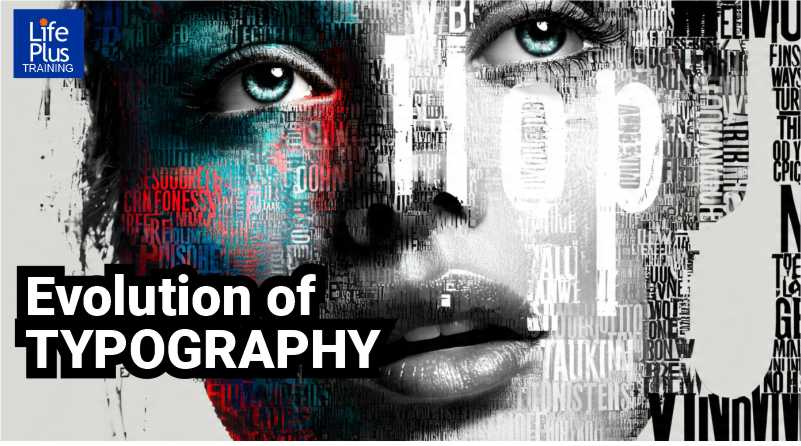
The Timeless Journey of Typography
From carved symbols to digital fonts, how type has shaped human expression
Ancient Beginnings: Symbols as Language
Typography’s story begins long before the word itself existed. Ancient civilizations carved hieroglyphics into stone and pressed cuneiform symbols into clay tablets. These early forms weren’t “fonts” as we know them, but they established the principle: visual marks could carry meaning across time and space.
The Calligraphic Era (3000 B.C. – 15th Century)
For centuries, writing was an art of the hand. Calligraphy flourished in manuscripts, from illuminated medieval texts to Islamic scripts. Each stroke was a performance, and typography was inseparable from artistry.
The Gutenberg Revolution (15th – 18th Century)
Johannes Gutenberg’s invention of movable type in the mid-1400s transformed communication forever. Suddenly, books could be mass-produced, spreading literacy and ideas at unprecedented speed. Fonts like Blackletter dominated early printing, but soon type designers such as Claude Garamond refined letterforms into more elegant, readable styles.
Enlightenment & Industrial Expansion (18th – 19th Century)
As printing spread, typography became a tool of persuasion and commerce. Transitional and modern typefaces like Baskerville and Bodoni emphasized clarity and contrast, reflecting the rational spirit of the Enlightenment. The Industrial Revolution brought bold display typefaces for posters and advertisements, mirroring the energy of bustling cities.
The Modernist Shift (20th Century)
Typography entered the age of design movements. The Bauhaus embraced sans-serif fonts for their clean, functional appeal. Later, Helvetica and Univers embodied neutrality and universality, while designers like Jan Tschichold codified rules for modern typographic grids. Typography was no longer just letters—it was a design system.
Digital Typography (Late 20th Century – Present)
With computers, typography leapt into a new dimension. Designers gained infinite flexibility: fonts could be scaled, kerned, and manipulated with precision. The rise of desktop publishing democratized design, while web typography introduced responsive, screen-friendly fonts. Today, variable fonts and AI-driven type design push boundaries further, blending tradition with innovation.
✦ Typography as Culture ✦
Typography is more than aesthetics—it reflects the values of its time. From sacred manuscripts to Instagram posts, type has always been a mirror of human creativity and communication. Its evolution shows us that letters are not static—they are living forms, adapting to technology, culture, and imagination.
Learn the art and science of typography with Lifeplus Computer Training at Purbachal Haltu. 📞 Call 9477764615 to explore our creative courses and start your journey today.


